Saturday, January 6, 2024

Poor Things.


     In Hollywood, it happens that an artists receive Oscar but not for the work they deserved it. For instance, Guillermo del Toro received "the bugger" (P. O'Toole's word) for the "Shape of Water" but did not -- for much more coherent and innovative "Pan's Labyrinth". 

    Equally, Emma Stone got it for pathetic "La La Land". But she is unlikely to get it for her brilliant performance in "Poor Things" if anything for absurd dozen or so sexual acts during the movie (obviously Yorgos Latimos loves filming E. S. naked). 

    The movie itself is a happy-end Frankenstein meeting Pygmalion by the way of the "Island of Dr. Moreau" further garnished by steampunk and even Fado. 

    Latimos tried to inject some verity in the sordid Belle Epoque prostitution with the question by the jilted fiancée: "Did you get checked for the disease?" and oddly repulsive characters of clients. Yet the model-looking hookers -- compare with the depictions by Degas and Toulouse-Lautrec -- in designer costumes remain. Also remains a caring brothel madam. In all-cash society brothels had to be guarded by burly characters despising and abusing working girls. Alcoholism and drug addiction ran rampant and otherwise powerless girls had to vent their abuse on each other. 

Friday, December 22, 2023

The Boy and the Heron.

    Miyazaki did it again. As a non-member of Japanese culture, I could not understand half of the movie. There is a vague suspicion that there is a back story of "Old Japan", which disappears with the Tower vs. "New Japan" emerging out of the flames of war but this is the end of my understanding. The movie borrows the premise of a boy traumatized by the fiery death of his mother during American bombing of Tokyo and succumbing to living in the world of imagination from "Pan's Labyrinth" and grossly underappreciated "A Monster Calls". Dwarf-heron is a trickster connecting world of the dead (the Past) and the world of the living (the Present) provides some cohesiveness to the story to this Western barbarian. 

Bradley Cooper. Maestro.


         A remarkable feat by Bradley Cooper. A major American director is born. Furthermore, after Ridley Scott's ornate but listless "Napoleon", he demonstrated how biopics can be made without excessive stretching of a screen time or cursory scenes, not understandable without reading bad, plagiarized 1400 pp. long biographies. Cooper is brilliant as Bernstein. Carey Milligan as his much-suffering wife is perfect. Party dialogs, half-silenced by an ambient noise are perfect, camera work is perfect. Presentation of serious music in a feature movie is perfect. I was not particularly touched by the film, but again, this may be it was my jealousy for Irina Shayk. 😀 

Saturday, December 2, 2023

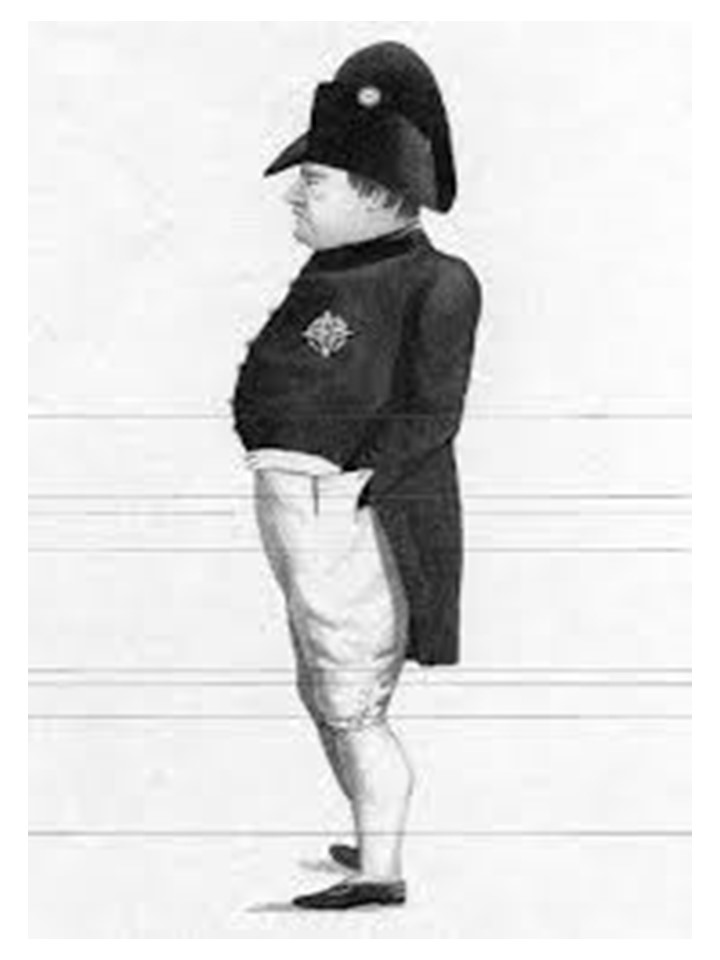
Napoleon by Ridley Scott


     It is hard for me to understand the rave reviews of Napoleon. Equally hard for the viewers is to understand the origins of Napoleon charisma from the movie . The history is twisted and garbled. For instance, it were Russian-Austrian allies who took the heights above the Austerlitz battlefield, and Napoleon's camp was below. The uphill attack of the strong position by the French, contrary to all contemporary tactics, decided the battle. In the current political climate I would not expect anything smacking of fairness in showcasing his Russian debacle, which broke the backbone of the Napoleonic system. Yet, the omission of Trafalgar and Volkerschlacht ("Battle of Nations") at Leipzig, the whole 1813 German campaign does not make sense. The absence of Metternich is as awkward as would be a movie about American Revolution missing Adams, Madison and Hamilton. 

    The most enduring heritage of the First Empire was the Code Napoleon. It is absent in the movie. Instead, the sex of Napoleon and Josephine, doggie style, is demonstrated at least twice. Why?

    Joaquin Phoenix, a great actor, simply was not given enough substance to act. Alexander I, who was 30 during the meeting on the Niemen and 37 after the fall of Paris -- a quite mature man in then scheme of things -- is shown as a youngster. Contrary to the historical feat of two emperors meeting on the raft in the middle of the river, they talk in an unremarkable park. The only brilliant act is Rupert Everett's Wellington in (again) poorly shown Battle of Waterloo. The whole failure of the Napoleonic enterprise is attributed to Waterloo, which was elucidated in a much better 1970 movie with Rod Steiger as Napoleon. General Arthur Wellesley, not yet even the Duke of Wellington, sitting as the head of the table before two emperors and three or four kings, is as incongruent as the Orthodox Church scene in Catherine the Great

    The 1814 act of abdication is not clear at all. In fact, after the Russian Army took Paris, Napoleon did not consider his position as hopeless. The people of Paris, who were not very important, but also his marshals forced him to abdicate simply because of general weariness of more than twenty years of warfare. 

Saturday, November 18, 2023

The Whale.


Aronofsky can be deservedly called "freak of the bleak". The movie is excessively dark, i.e. realistic. A gay man rejects anyone who wants to help him (a caregiver, estranged wife, a boy evangelist) for the respect of his sociopathic daughter. 

Monday, October 16, 2023

Golda.


   Who's that? Golda Meir or Helen Mirren? 

        A sharp divergence of opinions between critics (tepid approval 50%) and overwhelming (90%+) of the audiences testifies to the social barriers. While majority of critics represent New York - Los Angeles neocon milieu, the audiences know better. The neocon dogma prohibits describing any military action by the State of Israel in anything other than superlative terms and its military leaders as fractious, vacillating and nervous, i.e. the real people. 

   Biopic is a very difficult genre and the movie holds its own to the Oppenheimer blockbuster. Helen Mirren is almost unrecognizable but wonderful, portraying Golda Meir's emotions through two inches of makeup by only the eye and lip movement and by gait. 

    Some omissions -- the absence of Abba Eban, the foreign minister and counterpart to Kissinger -- can be explained by the desire to streamline the story. So is the absence of general Adan, who is credited more for the offensive from the beachhead across the Suez canal than the tireless self-promoter Sharon. Disobedience of Sharon to the High Command is mentioned in passing ("he brought more war correspondents than tanks to the front lines") but is never emphasized. 

        The movie shows Gen. Elazar, who according to more credible sources was the only commander who did not lose nerve in the face of horrible first days of war, in a more positive way than the Agranat Commission. After all, something good finally came from the billionaire Paul Singer who financed the movie. The Commission basically put all fault on him and the head of military intelligence Eli Zeira supposedly for not convincing Golda Meir to preempt the Arab's strike and, simultaneously, not declaring a total mobilization (the goals, frankly inconsistent with each other). In the 1982 film A Woman Called Golda, Golda Meir's reticence to launch a preemptive strike was explained bluntly: "If we again attack first as in 1967, we would not be able to count on the American aid". But that movie was made long ago. Now, with the American triumphalism, nothing can hint that the US elites and public at the time were less than unanimous in support of Israel.  

      The work of cameramen who fitted Helen Mirren into diminutive Golda also deserves recognition. At her normal height Helen probably would be taller than most of her generals. 


Tuesday, September 26, 2023

Haunting in Venice, by Kenneth Branagh.

     Branagh rendering of the "Orient Express" was awful, "Death on the Nile" was passable but by the third Agatha Christie based movie, he shaped up. It is quite well-wrought thriller, very loosely based on the "Halloween Party" by Agatha Christie, or so I was told. The only shortcoming of this griping movie is that thought process of Poirot is not shown and his conjectures about a crime come from nowhere. Yes, and Poirot retiring into a Venetian palace is over the top.