
A rotoscope movie, extremely inventive in details and successfully merging Western comic and anime styles but totally senseless.
A rotoscope movie, extremely inventive in details and successfully merging Western comic and anime styles but totally senseless.


The action is good, period details are excellent but the movie characters are underdeveloped. There is no ambivalence in them. Ridley Scott freely borrowed cinematic stuff from Alaine Resnais--repeated shots of the same scene to enhance realism, and used the template of the "Return of Martin Guerre".
I am sure that his characters were such in real life: J. de Carrouge was a dependable but tempestuous and semi-literate boor, his wife--a wronged woman, LeGris--a social climber devoid of any scruples and Count d'Alencon--a scheming Renaissance prince straight from Machiavelli--enlightened but ruthless and immoral. But this does not make a movie interesting. I would wish a conscious retreat from the historical chronicles--that LeGris was really madly in love, that Marguerite was torn between her true feelings and conjugal duty, and that the Last Duel was essentially a glorified suicide of LeGris to save the honor of his beloved, even at the cost of his own soul--not a trivial consideration for the Middle Ages.
Noah Baumbach never veers from his well-beaten track of the family chronicles of upper-middle class New York families, probably inspired by his own adolescence, for now he firmly graduated into the Hollywood upper class. But in this particular genre he achieved perfection. After the flailing "Frances, Ha", he completely rehabilitated himself with the coherent and powerful storyline and the impeccable performances of Driver, Johansson and Dern. Despite the fact that the narrative dissolves into a soapy-syrupy ending (the creatives who cannot get UCLA professorship on a dime are obviously outside Noah's mental scope) just like infirm but daring "Sideways", Baumbach retains his cinematic verve to the end. Ninekaikos, Ebraious!

A fresh premise--that a poor student driving campus bus at nights and losing his virginity--can be interesting. Movie is well made but it exposes a strange slant. Why all the guys on a campus of a second-rate university look realistic--unkempt, over- or underweight slobs with lots of issues--but all the college girls are stereotypical Hollywood casting material and sex-hungry sluts at that? Director's prospective must be seriously skewed.

David Fincher proved that he can create masterpieces ("A Curious Case of Benjamin Button") but also that he has problems with the pace of his movies. All substantial dialogues happen in the last 13 minutes of his movie, and the rest, in which he intended to imitate Orson Welles' style is incomprehensible. I spent 3/4 of the length of the movie by hysterically googling the characters and trying to understand why they are there in the shot. My experience was not helped by the fact that the actors playing Joseph Louis Mayer and Irving Thalberg looked almost identical. Was Fincher implying that Irving Thalberg was the son figure for L. B. Mayer before his own son could take the reins? If yes, the hint can be understood only by Welles' buffs. As I already mentioned, a director must not be in love with his characters, otherwise they take over him.
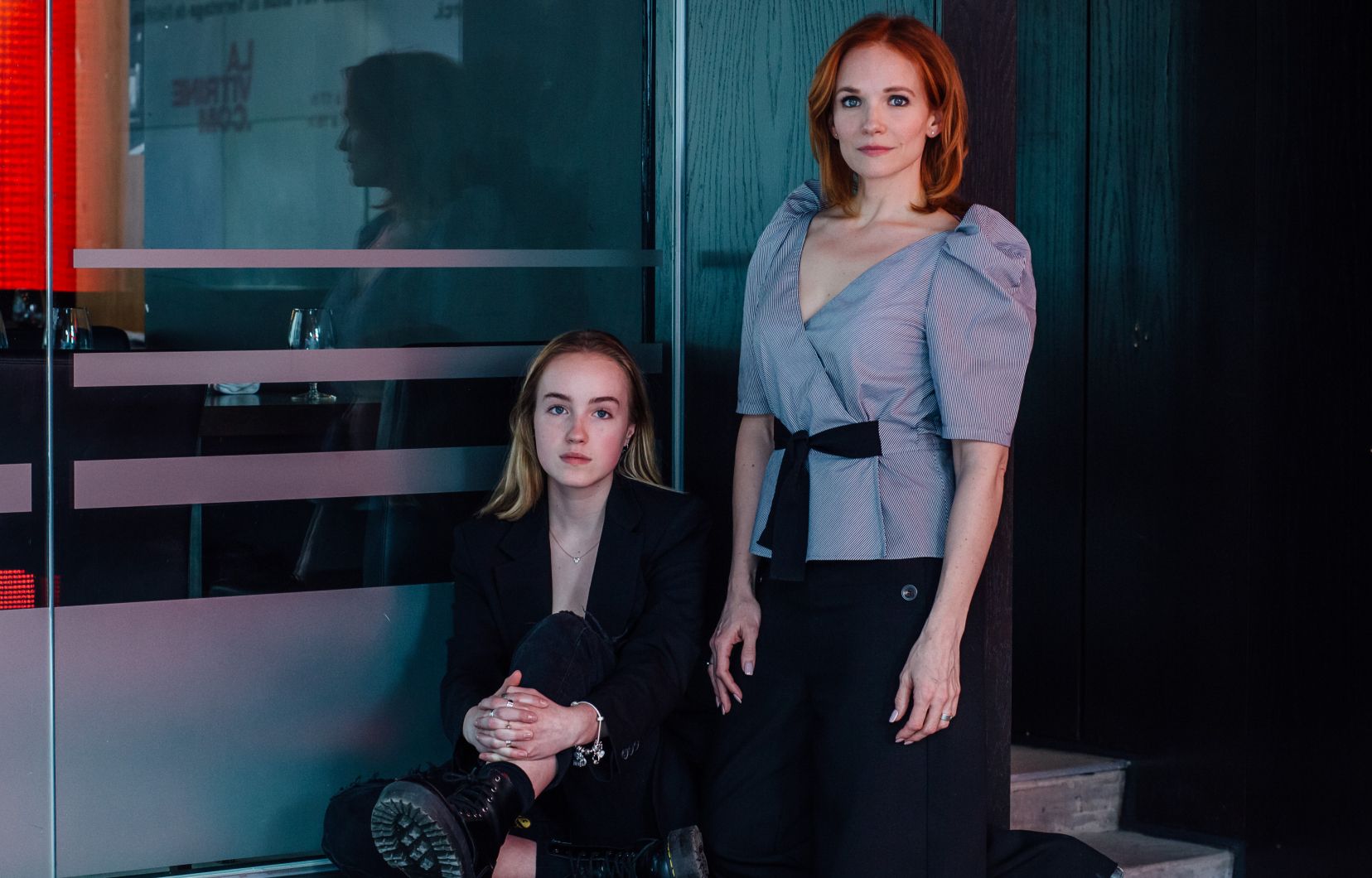
Impeccably directed and acted movie--at some point I became afraid of the teenage girl having to act a role with some shots borderline to a child pornography--but, unlike much more nuanced Bad Tales, it is sociologically and psychologically unsatisfying. Of course, I wished for a happy ending, if only for the vindication of Emilie Bierre's and Marianne Farley's indomitable heroines, but suicide would also be explainable.
Whether provincial Quebec is in such a medieval state of consciousness that the null hypothesis in the case of a pregnant 13-year old girl, refusing to disclose who impregnated her, would not be that she was raped and that the rapist is threatening her or her family and not being investigated by police? Why loving and caring mother inexplicably refuses to go to the police and/or district attorney's office and leaves the whole case in care of a bumbling social worker doubling as a local DJ? That a local mayor, the rapist, is so powerful that he can assure silence of an entire town is perfectly believable--in the US leaders of religious sects sometimes control and intimidate the entire counties--but that mother is barely interested in uncovering the whole story and easily subscribes to the cockamamy suggestion that the mayor's adopted son is a culprit? That the mayor's childless wife does not notice his interest in underage girls and that mother of a victim and her best friend never communicate on that issue throughout all the rapturous event? If the director Jeanne Leblanc wanted to demonstrate that even well-intentioned people easily fall to the simplest and most convincing (or the least traumatic) version of events, she achieved that purpose. But that purpose is outside of cinematic story she so masterfully displayed.
